
Do you have an apartment in Panama and want to welcome guests through Airbnb?
Before taking photographs and opening your calendar, you need to answer three questions:
- Whether you can carry out this activity in your property
- How much it will cost to look after each stay
- And who will deal with any problems
Even if your property is in excellent condition, keeping the business running means coordinating cleaning, access, messages and maintenance, as well as meeting the requirements that apply to its location and use.
To bring all the information together in one place, we have prepared this guide to help you organise your first steps as an Airbnb host in Panama.
Here you will find:
- What to prepare
- How to create your listing
- What to check with the authorities
- And how to organise a service you can sustain over time.
Much of this comes from what we have learnt managing more than 700 properties. Let’s get started!
Requirements for listing your home on Airbnb
Start by checking whether your accommodation is viable. Owning a property and having an Airbnb account are two parts of the process, while permission to offer particular stays depends on the regulations and the property’s characteristics.
Before publishing your listing, check the property’s permitted use and, if it is in a building under a horizontal property regime (PH), review its documentation and rules. Permission to use the pool or register visitors, for example, must be clear before you promise these features in the listing.
A property prepared for the way guests will use it
First, think about what someone who has just arrived in Panama, possibly after a flight, will need. They must be able to get in without confusion, rest, connect to the internet and understand how to use the equipment you have advertised.
So check at least the following:
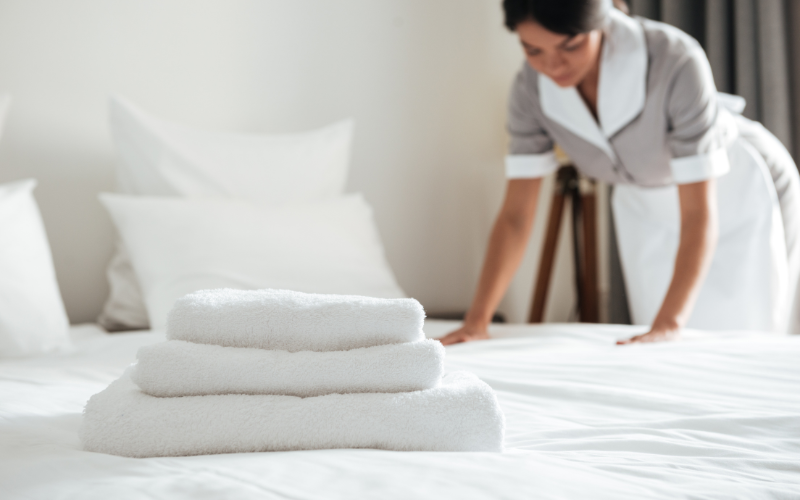
- Rest: beds, mattresses, bed linen and towels in good condition, with capacity matching the listing.
- Facilities: kitchenware and appliances appropriate to the type of accommodation, without advertising services you cannot provide.
- Connectivity: a tested connection and easy-to-find access details, especially if you welcome travellers who need to work.
- Safety and maintenance: checks on installations, locks and equipment, together with measures that match the quality of your property.
- Arrival information: the address, access directions, building rules and a contact person.
Also describe the parking accurately, if there is any, explain how to use the air conditioning, what the communal areas include and any access restrictions guests need to consider.
For example, if there is a pool, guests need to know whether they can use it, at what times and under which conditions.
For more information, the guide to holiday rental house rules can help you organise instructions for sharing the space considerately. Use it as a reference and adapt it to your property.
A budget that includes the work between bookings
To start putting your budget together, calculate how much you will spend on:
- Cleaning
- Laundry
- Consumables
- Utilities
- Maintenance
- And the commissions you will pay.
If you need someone to welcome guests or deal with a breakdown, include that cost too.
Beyond this, prices on other listings can provide an initial benchmark, provided, of course, that you compare similar properties.
Check their capacity, location, facilities and booking conditions as well, to get an overview of the market.
To organise changeovers between guests, you can refer to the guide to cleaning holiday apartments. Its practical recommendations can serve as a checklist, although you will need to assess the costs and regulatory references for your own circumstances.

How to register as a host
Once you have checked that offering your property on Airbnb is viable, you can prepare your account and listing. Bear in mind that Airbnb may request identity checks and other details before you publish or receive payments, so use accurate information and follow the instructions shown in your account.
To familiarise yourself with the process, the guide to how Airbnb works for property owners can help you understand the platform. For procedures, commissions and payout options, always check what applies to your account.
Create a listing that helps guests decide
Your listing should answer guests’ basic questions before they have to ask you. Be as clear as possible about the type of accommodation you offer, where it is, how many people can stay and which amenities are actually available.
- If you rent out a room, make clear which areas guests will need to share.
- If you offer the entire apartment, also explain any features of the building that may affect the stay, such as the lack of a lift, narrow stairs or particular access arrangements.
Photographs should also help guests understand the accommodation, so show the spaces they will use in a logical order: bedrooms, bathrooms, living room, kitchen and other areas they will normally use.
And, of course, if there is an important limitation, it is better to show it and explain it clearly than to try to hide it behind a more attractive photograph.
The same applies to the description. Prioritise useful information: the property’s layout, how to access it, the equipment it includes and what guests will find in the area.
Open a calendar you can realistically manage
Before you start taking bookings, block the dates when you will use the property or need to carry out maintenance. You can then set the price, minimum stay and cancellation conditions, taking into account both legal requirements and the time you need between bookings.
If you advertise on several channels, please pay particular attention to availability. Check that the calendars are coordinated and that updates appear correctly. A simple mismatch, for example, could lead you to accept a booking for dates that were already taken.
Before you publish, also review all the information travellers will see and the financial conditions of your account. Commissions may change depending on the structure that applies to you, so the most reliable way to check how much you will receive for a booking is to consult Airbnb’s breakdown.
Finally, set up a payout method available for your circumstances and complete the checks requested by the platform. Bear in mind that Airbnb may send a payment on one date and the money may reach your account later. Check the chosen method’s timeframes and conditions so you can organise your expenses without counting on income before it arrives.
Legal requirements: Law 80 and ATP authorisation
As we have already seen, this needs to be resolved before offering stays or advertising the accommodation. The precise location matters: a provision concerning the district of Panama has a specific territorial scope and cannot be used to infer the conditions throughout the country.
What Article 21 of Law 80 establishes
Law 80 of 8 November 2012 prohibits rentals of fewer than 45 days in the district of Panama by those without a public tourist accommodation permit. The text also provides for penalties for those advertising these services, including through electronic advertising.
If your property is in that district and you want to offer short stays, check its status and the necessary permits with the Panama Tourism Authority (ATP) before publishing your listing.
Be careful! Publishing a listing on Airbnb does not prove that you have this authorisation.
If the property is outside the district, you should still check the tourism, municipal and use requirements that apply. Choosing stays of 45 days or more does not, in itself, resolve the other obligations relating to the property or the activity.
What to clarify with the ATP and the building
The ATP provides information on public tourist accommodation and the National Tourism Register. Ask which category and procedure apply to your project, because general information on tourist establishments does not mean that any residential apartment can obtain a permit.
To prepare for that enquiry, gather the location, property type, authorised use and the length of stays you want to offer. Ask which documentation applies and which authorisations you need before operating.
If your property is part of a PH, also review its designated use, the regulations and the conditions for access and shared living. Keep the responses and documents relevant to your case, without treating the presence of other listings in the building as proof that your activity is permitted.
Finally, tax, invoicing and business obligations should be reviewed with a local professional according to your circumstances.
How to become a Superhost
In our view, Superhost is a status worth aiming for, mainly because it provides travellers with an additional sign of trust.
To explain how it works, Airbnb displays a specific badge on the profiles and listings of those who achieve this recognition, making them easy to identify in search results.
It also gives you greater visibility, more earning potential and access to exclusive rewards. That does not mean you will automatically receive more bookings, but it does make your track record as a host more visible to people comparing several properties.
With the legal viability already clarified in the previous sections, you are probably now wondering how to become a Superhost, aren’t you?
Superhost recognition is awarded to those who meet Airbnb’s criteria during its assessments.
According to Airbnb’s official requirements, updated to October 2026, the owner of an accommodation listing, with an account in good standing, must meet the following criteria:
- Have hosted at least 10 reservations, or 3 reservations totalling at least 100 nights.
- Achieve a 90% response rate to new messages and booking requests within 24 hours, accepting or declining the latter.
- Maintain a cancellation rate below 1%, subject to Airbnb’s permitted exceptions.
- Maintain an overall rating of 4.8 or higher.
Airbnb reviews compliance every quarter over the previous 12 months, and the Airbnb hosting tools let you check your progress from your dashboard. This allows you to keep a detailed record.
The experience starts before arrival
To put that into practice, you need to design a premium service from the outset.
Here is what we recommend:
- Send clear instructions and check that guests know how to get in.
- A thoughtful welcome can also make that first contact easier. The ideas for welcome gifts can provide inspiration, adapted to your accommodation and what you can maintain between bookings.
- After each stay, use cleaning and maintenance checks to identify problems before the next arrival
- If you receive repeated complaints about noise, access or equipment, review both the service and the information in your listing.
For more practical tips, check out our step-by-step guide to managing a vacation rental.
When to delegate management
To organise this work, you can handle some tasks yourself and outsource others, or consider a more comprehensive management service. Before deciding, ask for a proposal detailing what the service includes, which costs are charged separately and how you will receive information on bookings and revenue.
These questions will help you compare:
- Who prepares and updates the listing, prices and calendar?
- How are cleaning, laundry and maintenance coordinated?
- Who assists guests and who visits the property if there is a problem?
- How are expenses authorised and statements presented?
- What minimum term and termination conditions does the contract have?
The decision should start with your property, its legal viability and the time you want to devote to it. With these points clear, you can decide whether to handle the day-to-day work or use a holiday rental management service in Panama.
At Home2Book, we specialise in Airbnb management in Panama and manage more than 700 properties internationally. Get in touch through this form and we will be delighted to help. atenderte.