

Do you want to let a property and are wondering how to furnish a flat so that it stands out, lets quickly and generates steady income?
Whether you need ideas on how to furnish a small flat, a family home or a studio, in this article we have put together a selection of practical tips that we use ourselves when decorating the nearly 600 properties we manage.
We have kept it practical and concise so you can answer all these questions:
- Why a well-furnished property attracts the best tenants.
- How to choose a coherent style according to your guests and budget.
- Which strategies work best for making the most of every square metre.
- And what to do so your furniture lasts and continues to look as good as new after a period of use.
Shall we get started? Let’s go…
The importance of furnishing a property well to attract the best tenants
Let’s do a quick exercise:
Imagine two identical listings: both are in the same area and have the same price.
The first has photos of a bright living room, a comfortable sofa and a whole home decorated in neutral colours.
The other, by contrast, shows a rather soulless space, second-hand furniture and pieces that clearly look many years old.
Which one would you book? Exactly, the first one, wouldn’t you?
That is why spending time on how to furnish a flat for letting is essential, because it:
- Increases your occupancy rate
- Helps you attract tenants who are willing to spend a higher budget
- And, believe it or not, it even helps you filter for more responsible tenants.
In fact, to give you an idea, choosing furniture well can justify up to a 15% increase in monthly rent, or a better nightly rate if you offer holiday lets.
And, really, decorating a property for letting is not that difficult.
You only need:
- A clear idea of which style to choose depending on the type of tenant you want to attract
- Some basic knowledge of decoration
- And a defined budget
But let’s take it step by step…
Defining the right style for the right guest
To define the right style, we suggest using a simple method: analyse the property’s surroundings, understand what benefits the guest is looking for and, finally, follow a few general decoration recommendations.
It works as follows:
Analyse the setting in which the property is located
The first thing to consider is the property’s location and climate.
For example:
- If your flat is on the coast, we recommend choosing fresh fabrics, furniture that withstands humidity and white walls that reflect light to reduce the temperature during hot periods.
- If, on the other hand, the property is in a city with cold winters, use warmer textiles, add soft rugs and include a floor lamp that invites guests to sit down and read.
Secondly, you also need to know the rules of your building or local council, because this will also influence the decoration:
What do we mean by that?
- If there are quiet hours, for example, you can use thick rugs and acoustic panels to reduce the sound of footsteps and moving furniture.
- If energy efficiency is required, you can install thermal blinds or ceiling fans that cool the rooms without pushing up the electricity bill.
And, thirdly, look at what is around the property so you can adapt the home.
For example:
- Is the beach five minutes away? Add a rack for towels and, if you have a garden, install an outdoor shower so guests can rinse off sand before going inside.
- Is the area very lively at night? Make sure guests can rest by adding double-glazed windows and blackout curtains.
Understand what benefits the guest is looking for
Once you have done this first exercise, there is one more step before deciding which furniture or decorative items to buy.
That step is to think about what the guests who come to your area are looking for.
Let’s look at a few scenarios:
- A family with children, for example, will appreciate bunk beds and space to store toys.
- A group of friends, however, will prefer individual mattresses that can be separated.
- A couple will look for a mattress of at least 160 cm without joins and soft lighting beside the bed.
- And a digital nomad? They will probably value, above all else, a spacious desk and an ergonomic chair to work from.
Follow some general decoration recommendations
Have you defined the previous point? Then let’s move on to the next one: understanding three key points that are necessary when defining a style.
The “neutral” look: as we mentioned at the beginning, good photographs are essential for getting a property let, agreed? The best approach is to start from a general neutral base: walls in soft tones, touches of light wood and natural fibres.
That bright canvas will fit almost any style and will allow travellers to imagine their own holiday when they see the photos. Of course, you can then play with furniture types, rugs and pictures, but it is better not to overload the space from the outset.
Durable materials: make sure everything you buy can withstand intensive use: stain-resistant upholstery, good-density wooden boards and, if you live near the sea, marine varnishes that withstand salt air.
And here we should add one small caveat: holiday lets are the type that cause the least wear and tear on properties. Why? Because in most cases, guests do not spend that much time there; they are out visiting other places.
Flexible furniture: finally, as far as possible, try to make the furniture flexible.
Specifically, we mean:
- Beds that you can join together or separate
- An extendable table that grows when guests come
- A modular sofa that can change layout…
This will allow you to adapt the property to couples, families or groups of friends without too much difficulty. Although you may choose a type of guest you want to attract, in the end they are the ones who choose the property, and you should be able to adapt to most of them so you do not lose bookings.
If you prefer, since there are several concepts to manage, let’s look at a specific example.
Property: 4 bedrooms in Costa Adeje (Tenerife)
Objective: attract travelling European families and couples who want to work remotely.
– Mild climate all year round: you will need quiet ceiling fans, curtains that filter the sun’s rays well, sofas with removable covers, etc.
– The area offers beach and restaurants: you can install a sideboard for wine glasses and easy-clean placemats. You can also add an outdoor table for six on the terrace so guests can enjoy dinner at sunset.
– Distribute the four bedrooms as follows: two doubles with 160 x 200 cm beds, one twin with 90 cm beds that can be joined, and one office-bedroom with a sofa bed and a wide desk. This covers the needs of both families and remote workers.
Does the idea make sense? We now recommend doing this exercise with your own property and writing down the answers so you have a clearer idea of what you need before opening the Ikea catalogue or visiting your nearest furniture shop.
How to set an appropriate budget
To set a budget, you will normally need to consider these three areas:
- Comfort-improving items: mattress, sofa and armchairs.
- Functional items: appliances and wardrobes that prevent breakdowns and clutter.
- Aesthetic items: lamps, rugs or pictures that add the finishing touch.
To make it more specific, these are the budgets we usually recommend if you are starting from scratch:
- A studio of up to 35-40 m2 usually costs between EUR 3,500 and EUR 5,500.
- A one-bedroom flat rises to a range of EUR 5,000 to EUR 8,000.
- A family flat with 2 or 3 bedrooms will probably cost more than EUR 7,500.
Even so, you can save a little by taking these measures:
- Buy an appliance pack together
- Make the most of wardrobe promotions in large retailers, etc.
In addition, buying everything together will make the style more coherent, so we definitely recommend doing it this way.
What are the essential pieces of furniture for each room
Now that we have an idea of the prices, let’s look at what each room will need at a minimum:
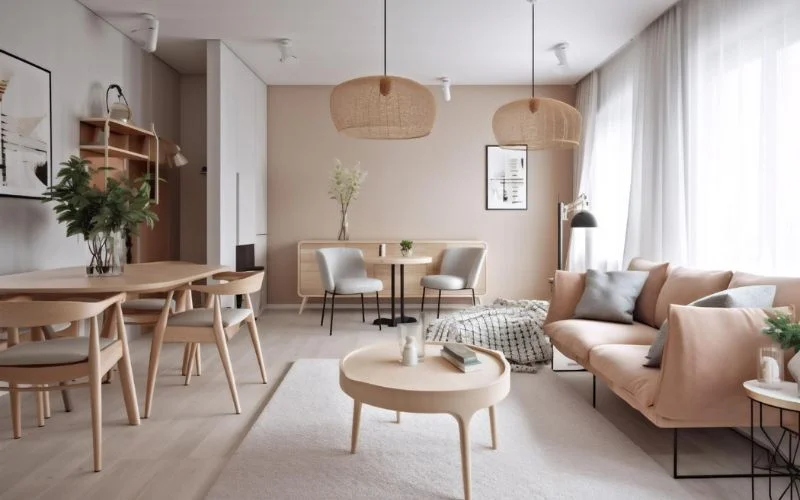
Living room: sofa, coffee table and storage
The living room is the real meeting point and the sofa is, without doubt, its main feature.
What do we recommend? It depends.
If, for example, you have decided that you want to attract families, choose a model more than 2 metres wide that invites everyone to watch a film together.
However, when space is limited, as in a studio or one-bedroom flat, we recommend the following:
- A 160 cm sofa bed with storage that can work as a relaxation area during the day and become a bed at night without taking up extra space or losing storage capacity.
- A lift-top coffee table for dining comfortably or resting a laptop when there is no separate dining room.
- Vertical storage with units that reach the ceiling, or almost, to make good use of the space.
A small trick is to choose or paint the doors white: the room will look clearer, dust will have less surface to settle on and your guests will see everything in order at a glance.
Bedrooms: the place for well-earned rest
Think of the bedroom as a kind of refuge for resting, even for guests who only stay a few days. And here, of course, the bed is the star.
So start with a 150 x 190 cm bed with a firm mid-to-high-range mattress so it does not deteriorate at the first sign of use. This is the standard size in Spain and ensures guests are comfortable without increasing the budget too much.
If you expect travellers from northern Europe, extend the base to 200 cm and you will avoid the typical “short bed” complaint, which we have seen many times, as they are used to different measurements there.
We also recommend adding a modular wardrobe with a rail, shelves and a deep drawer so they have space to store clothes, while leaving the centre of the room clear so it looks more spacious.
Finally, replace traditional bedside tables with floating shelves: they visually lighten the room and, for example, allow a robot vacuum cleaner to clean without obstacles.
Believe us, it seems like a minor decision, but any speck of dust in the bedroom can lead to poor comments and, as a result, fewer bookings in the future.
Kitchen: make the most of the space
In a holiday let, every centimetre has to be used well, so if you do not have much space, install a wall-mounted folding table: when open, several people can have breakfast comfortably; when folded, the passage remains clear.
Obviously, if you have enough space, you do not need to do this, but it is always useful to mention that this solution is available.
In any case, include the most energy-efficient fridge you can afford and a washing machine with enough capacity to minimise the number of laundry loads needed each time.
In addition, if the flat is a studio, replace the conventional oven with a microwave with grill. Besides saving money, you will gain space for an extra cupboard if you need it.
Bathroom: order and a spa-like feel
The bathroom is a very critical space in the home and must always be in immaculate condition.
In this case, to make it look more spacious, we recommend a low unit with a wall-hung basin. As with bedside tables, it is easier to clean and looks very modern.
It is also advisable to add a mirror with integrated lighting. Finally, if you can, reserve twenty centimetres in the shower wall for a recessed shelf: shower gels and shampoos stay within reach, the tray looks uncluttered and the guest feels they have entered an orderly, clean space.
How to choose materials and colours
The best approach here is to be practical and start by choosing materials that are easy to clean and able to withstand intensive use.
For example, a laminate worktop is quite economical and does the job well. If you have a little more budget, a compact worktop, a board highly resistant to heat and humidity, holds up very well. And, if you are looking for a high-end finish without sacrificing durability, quartz is probably the best option.
For flooring, we recommend boards prepared for humidity and, in the living area, stain-repellent upholstery if you can use it; you will be grateful later.
If the property is by the sea, it is also worth taking precautions such as giving the walls a coat of anti-mould plastic paint so they do not deteriorate as much.
As for colour, the idea is also simple: less is more. Above all, if you are not getting advice from a decorator and want to do it yourself, keep it simple and use a light base, such as off-white, cream or very soft grey, to visually enlarge spaces and make it easier for all decorative elements to work together.
That said, over that white-toned “canvas” you can introduce, for example, touches of light wood for greater warmth, charcoal-grey accents if you want a contemporary feel, or sand and pastel-blue details to suggest, where relevant, that the sea is nearby.
Working with neutral colours will also allow you to change cushions, prints or blankets each season and give the home a fresh look without investing in furniture again.
How to optimise space as much as possible
At the moment, every square metre is expensive almost everywhere. That is why you need versatile solutions that make good use of the space you are going to let.
Here are a few ideas, although imagination plays a part:
- In a small bedroom, we recommend raising the bed on a structure and placing a desk underneath to create a work area, especially if you want to let for longer stays.
- If your living room is narrow, replace the classic bookcase with a sideboard with sliding doors. You will get more storage without blocking the passage.
- Even a small balcony can become an outdoor dining area: a wall-mounted folding table and two folding chairs are enough, and they can be put away again if guests need to hang up swimwear.
In fact, if you want to emulate what decorators do, follow the rule of keeping 60 centimetres free between furniture and any obstacle.
And one extra tip, if we may: always screw tall units to the wall so they do not move with each tenant. It is a simple way to extend their life.
Decorative details: lighting, plants and pictures to create a real home
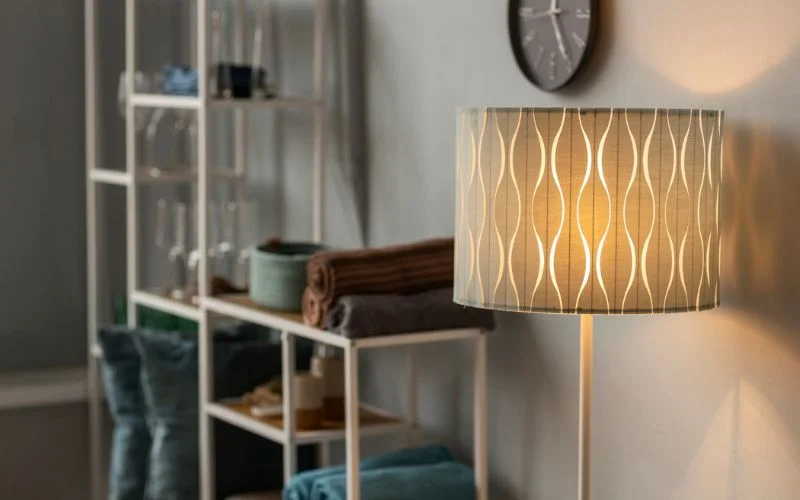
To keep things simple, we recommend considering these three aspects for lighting:
- Use warm general lighting: we usually recommend 18W LED ceiling lights, as they are enough to light most rooms.
- Add dimmable light points on bedside tables or desks to create atmosphere and save electricity.
- And add decorative lighting. For example, an LED strip behind the headboard, which costs barely EUR 25, installs in ten minutes and looks very good in platform photos.
As for greenery, it is true that plants require maintenance and, if you are going to use them, you need to choose them carefully so they do not deteriorate, but they give the home an organic and pleasant touch.
In this case, we recommend using varieties such as pothos and snake plants, which are very forgiving. However, in rooms without direct light, it is better to replace them with good-quality artificial versions.
Finally, if you want to give the home an artistic touch, you can add extra details such as framed prints to create a sense of stylish space without overloading it too much. Remember: less is more.
How to keep furniture in good condition and when to replace it
At this point, it is worth considering how you can maintain the home as well as possible so you do not have to reinvest in new furniture or repairs.
To do this, we recommend this simple plan:
Every quarter, vacuum and turn the mattresses, wash the sofa covers and check whether the taps have limescale build-up.
And once a year, clean the mattress upholstery, check the worktop joints and adjust the hinges on all furniture.
With that plan, a mattress lasts longer, the sofa holds up for more years and the worktop, especially if you seal it well, has a much longer useful life.
But let’s be honest: you will need to reinvest from time to time, so set aside a percentage of the annual rent to replace whatever the home needs.
Would you like to decorate the property yourself, or do you need help?
As you can see, furnishing a home requires some knowledge to distribute the space well, equip it with every comfort and give it a special feel that stands out from the competition.
You can do it yourself with a bit of method, but if you wish, we can support you through the process, not only with decoration but with the whole management service.
At Home2Book we are one of the leading holiday let management companies and currently manage almost 600 properties in the Canary Islands, so you can have complete peace of mind leaving your property in good hands.
Write to us through this form and we will be happy to help.