

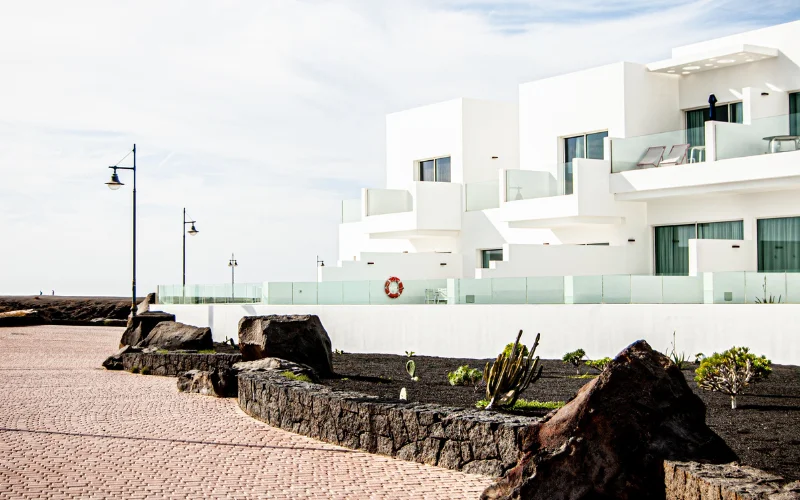
If you own a property and are thinking about putting it on the holiday rental market, you should know that a tourist apartment is not the same as a holiday let.
They may sound similar, but the legal implications are different.
So we have prepared a quick guide so you know:
- Which model best fits your property
- Which legal risks you need to watch
- And what impact each option can have on day-to-day management and profitability
That said, remember that regulations change by autonomous community and even by municipality, so get proper advice before making any move.
With that clear, let us start at the beginning…
What Is a Tourist Apartment?
A tourist apartment is a set of accommodation units within the same building, complex or development. Usually, one company or owner operates all the apartments as if they were a small hotel or aparthotel.
From there, most regional regulations agree on several key points:
- It is used continuously for tourist accommodation
- There are usually shared guest services, such as reception, cleaning, linen and towel changes or maintenance
- A tourist activity licence is required, along with registration in the regional register of tourist establishments
- And the establishment is classified by category, often using keys or stars, with minimum requirements for size, equipment and services
However, 95% of owners will not choose this route because it will probably be beyond their scope. Instead, they will usually fall under the model we will look at next…
What is a holiday home or holiday rental property?

Now let us look at the option that matters most to many small owners: the tourist-use dwelling, or holiday let. In other words, a residential property that is regularly used for tourist accommodation.
For example:
- A typical flat in a residential block
- A detached house near the beach
- Or a central apartment in a provincial capital.
In all cases, the key point is that the property has a residential nature, with its certificate of habitability or first occupancy licence.
And, of course, that it meets these characteristics:
- It is let temporarily, by the day or week, and sometimes by the month, subject to limits
- The home is provided furnished and equipped, ready to move into
- It is marketed through tourist channels such as Airbnb or Booking.com
- The activity is ongoing; it is not a one-off occasional rental
Now let us compare it with the previous model so the difference is completely clear and you avoid mistakes.ly clear and you avoid mistakes.
What Is the Difference Between a Tourist Apartment and a Holiday Let?

1. The Use of the Property Is Different
In a tourist apartment, the property is conceived from the outset as a professional tourist establishment. The whole building, or the whole set of units, is dedicated to short-stay accommodation. It would not make sense for a neighbour to live there all year and share a stairwell with passing guests, because the entire building works as a tourist product.
By contrast, a holiday let is an individual residential home in a block of flats or a development. It may have been the owner’s main residence at some point and, in many cases, could return to that use if regulations allow.
That is why tourist apartments are usually said not to have a residential character, while tourist-use dwellings can be used by their owners.
2. The Regulations Are Not the Same
From a regulatory point of view, the difference is also clear.
On the one hand, a tourist apartment is similar to a hotel and is regulated by regional decrees covering categories, minimum services, technical requirements, reception operations, official signage, inspections and penalties.
On the other hand, holiday lets are regulated through tourist-use dwelling or holiday home decrees, which specify issues such as:
- Maximum number of places
- Habitability conditions
- Equipment requirements
- The obligation to submit a responsible declaration
- Registration in the tourist dwelling register
And, increasingly, urban planning restrictions and area quotas.
3. The Services Offered Also Differ
Tourist apartments may include services such as reception, guest service during set hours, cleaning, linen changes or even catering. Not all of them are always mandatory, but the model is designed around a standardised, professional service.
In a holiday let, by contrast, the concept centres on providing an equipped home, rather than offering additional services.
Advantages and Disadvantages of Both Models
Now that the basics are clear, we can move on to what really matters to you as an owner: what advantages and disadvantages does each model have?
Advantages and Disadvantages of Tourist Apartments
The main advantages include:
- It is a professional tourist establishment, which can make marketing easier
- The average rate is often higher, though not always, thanks to a product feel closer to a hotel
- Management can be more efficient, because the same reception, cleaning and maintenance structure serves many units
However, there are obviously disadvantages too:
- You need a very high initial investment, because we are talking about buildings rather than a single home.
- Technical and service requirements are more demanding, both at opening stage and during ongoing operation
- Activity licence processing is more complex, with greater exposure to inspections
- Regulatory risk can be high, especially in cities where rules for new establishments are becoming stricter
Advantages and Disadvantages of Holiday Lets
For holiday lets, the clearest advantages are that they:
- Allow you to monetise an existing residential property without buying an entire building
- Offer a more flexible entry point for small owners
- Have technical requirements that are closer to those of a standard home
- Concentrate the initial investment on adapting the property and professionalising its management
But there are also several sensitive points:
- Urban planning restrictions are becoming increasingly important: licence quotas, stressed areas where new holiday lets are banned, requirements for planning compatibility and more.
- There may be conflicts with residents’ associations, especially in buildings where coexistence between residents and tourists is not managed well
- The daily management workload can be intense if the owner is not supported by a professional manager, like us
Which Is More Profitable and Easier to Manage?

There is no single answer, because it depends on a thousand factors. But here are some key points to keep in mind:
Profitability of a Tourist Apartment vs. a Holiday Let
- In a tourist apartment, if the location is good and management is professional, rates and occupancy can be very attractive, but the initial investment and fixed costs are higher.
- In a holiday let, the entry point is more accessible. You can start with a property you already own and turn it into holiday accommodation, but profitability is sensitive to seasonality, competition, platform commissions and legal limits.
Management of a Tourist Apartment vs. a Holiday Let
- In tourist apartments, management is quite similar to running a hotel: reception, customer service, permanent cleaning and maintenance staff… As you can imagine, all this requires structure, processes and a team.
- In holiday lets, each property has its own logistics for arrivals and departures, cleaning and maintenance. The challenge is therefore to professionalise management, something you can achieve by delegating to a specialist company.
Choosing the Holiday Let Route?
If you are like 95% of owners, you will probably choose the holiday let route. In that case, we can help.
At Home2Book, we are a holiday rental management company that manages more than 600 properties in Spain. We have specialists in customer service, revenue management and marketing, and we take care of every task, from cleaning and key handover to fixing damage, so you do not have to worry about a thing.
Contact us through this form and we will be happy to advise you on anything you need.