


If you manage a small hotel, you probably know that having good accommodation is not enough to make it profitable. You need to make many decisions every day in order to improve:
- Adjust prices
- Choose the right staff
- Look after guests well so they return and recommend you
- And keep costs under control
What is the problem? You have to do all of this at the same time.
And it is not easy, because when you run a small property you often do not have much budget or much time.
So you cannot spend hours researching the best tools to become more efficient or developing a strategy that works without hiring more staff.
But do not worry. We have prepared a practical guide to help you understand how to manage a small hotel in a profitable, efficient and professional way.
No magic formulas, just common sense, data and strategies that work.
Here it is…
Why Good Management Helps You Earn More with Fewer Rooms
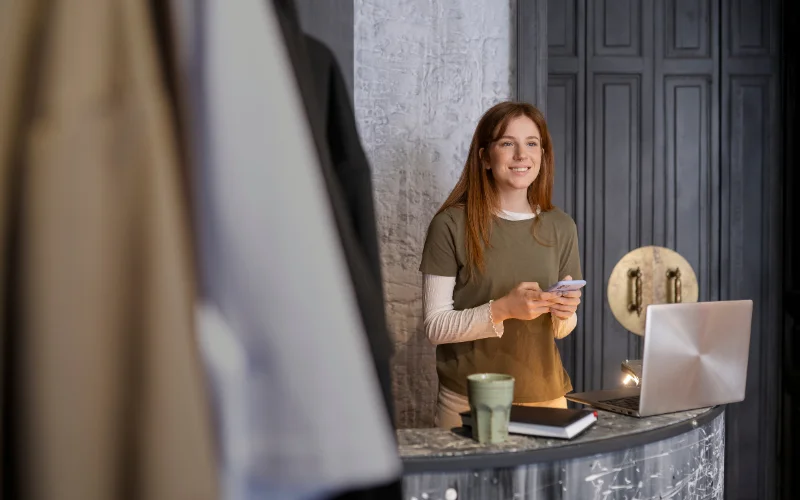
Managing a hotel with 10, 20 or 30 rooms has nothing to do with running a large resort. Here, every detail counts. Every booking, every review, every penny saved and every decision can help the business grow or make it wobble.
That is exactly why good management matters so much: because you can achieve more with less.
A small hotel does not have to merely survive; it can build loyalty, grow and generate profit.
But for that to happen, you need two things:
- Planning
- Strategy
We will look at both in detail below.
Before You Start: Research, Plan and Understand Your Ideal Guest
Study the Competition and the Market
Before you start making decisions, it is best to look around you and ask a few questions:
- Who are your direct competitors?
- What prices do they charge?
- What services do they offer?
- How are they positioned?
You can do this analysis yourself by going into Booking.com or Google Maps and filtering for similar hotels in your area.
All you need to do is note down prices, reviews and ratings so you have a general picture of the state of the market in your area and can build what is known as a competitor set.
It is also worth understanding demand in your area so you can set a good pricing policy.
So try to answer these questions too:
- Are there frequent events?
- Is it a leisure or business destination?
- Does it have clearly defined high and low seasons?
It may seem a little laborious, but it is the only way to start making better decisions. Without specific data, you will always be working on assumptions or intuition, and in today’s complex, changing reality, that no longer works.
Define Who You Are Targeting: You Cannot Please Everyone
You would be surprised how important it is to understand your ideal guest in as much detail as possible, because this is where most businesses, especially hotels, fail.
One of the keys to understanding how to manage a small hotel is not trying to appeal to everyone.
There is no way around it. You have to choose:
- Do you want to attract families?
- Couples?
- Workers?
- Digital nomads?
The clearer you are about your ideal audience, the easier it will be to adapt your prices, website, services and even the hotel’s decor.
A large hotel may be able to diversify and try to attract several types of customer, but a small hotel needs to specialise in a specific audience to maximise every effort.
That does not mean guests from several segments cannot stay at your hotel. It means you focus on those who are most likely to want it because of its location, its characteristics or simply because they are more profitable.
Prices, Bookings and Availability: Keys to Earning More
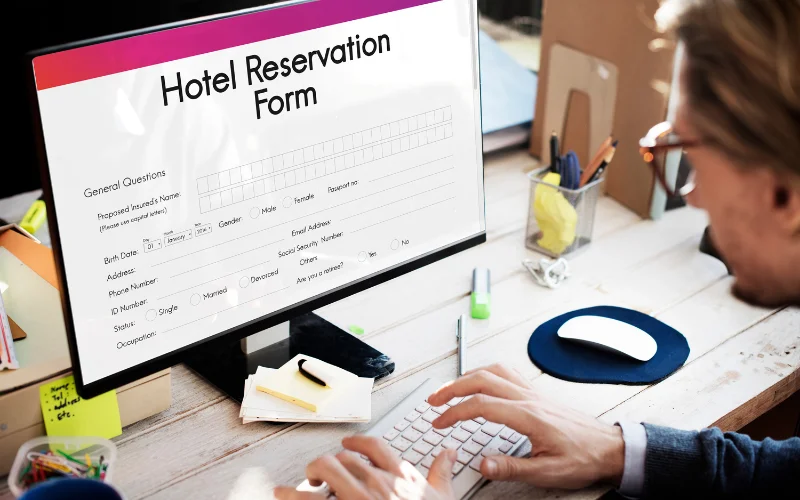
Your Pricing Strategy Matters, A Lot
Do not set one fixed price for the whole year. It is the easiest option because you do not have to update the portals where you advertise, but unfortunately it does not work.
Or at least, it is not very efficient, because you miss out on high-season profit, demand peaks caused by specific events and the chance to win bookings when the hotel is emptier.
Ideally, you should have a dynamic pricing strategy, one that adapts to demand, the season, events in your area or your own hotel’s occupancy.
For example:
- Apply different prices for weekdays and weekends
- Raise rates when there are events or demand peaks
- Offer controlled discounts to close last-minute gaps
- Set a minimum stay in high season if you have strong demand
But be careful: this is not just about filling the hotel. It is about maximising revenue per available room, which is what dynamic pricing is designed to achieve.
Technology That Simplifies Things: PMS, Booking Engine and Channel Manager
Once you are clear on this information, namely your ideal guest and pricing, you will run into a problem: even if you know which strategy to follow, you may not have the resources to apply it.
That can be solved with several digital tools that help you manage your hotel.
In our experience, as a minimum you need:
- PMS (Property Management System): your base system, where you control check-in, check-out, cleaning, payments, invoicing and so on.
- Booking engine on your website: this allows customers to book directly through your own channel.
- Channel manager: so you can synchronise prices and availability on Booking.com and other channels to avoid overlaps.
Without these tools, you will become overwhelmed and almost certainly make many human errors. What a small hotel needs most is to automate as many tasks as possible.
Why? So you can focus on what truly matters: providing premium service to your guests.
If They Cannot See You, They Cannot Book You: Marketing for Small Hotels
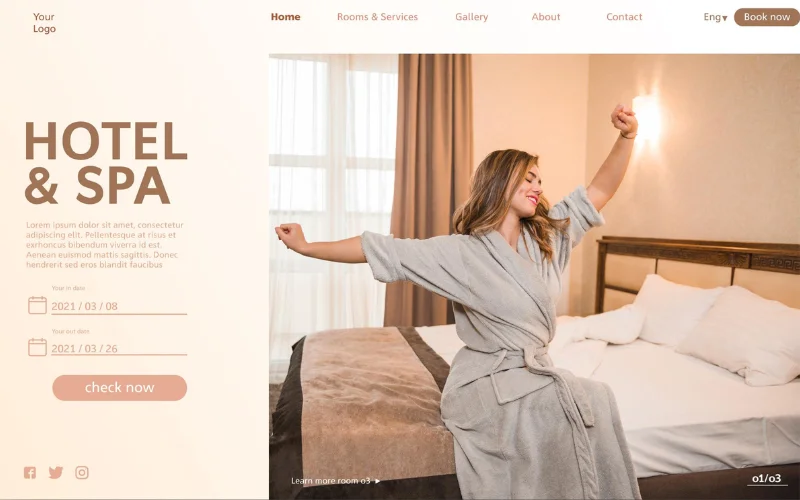
Have a Good Website and Work on Local SEO
You cannot depend only on Booking.com, and you already know that. You need your own visibility and a sales channel that you control completely.
For that, your website needs to be in perfect shape: fast, mobile-friendly, with a booking engine, good photos and clear copy. Above all, it needs to be well positioned in search engines so people can find you easily.
So our recommendation is to follow these steps:
- Optimise your Google profile
- Include your location in titles and descriptions, such as ‘Hotel in central Granada’
- Create useful content: routes, plans, tips, events… but do it without overusing ChatGPT, and share your knowledge in a close, human way
- Get real reviews and respond to all of them. If you automate processes, as we saw earlier, and focus on good service, this will not be a problem.
Yes, all of this takes time. But once you complete steps 1, 2 and 3, you will mainly need to focus, once again, on providing the distinctive service that earns recommendations.
Social Media and Promotions to Fill Gaps
Social media can help you launch occasional offers, share visual content (Instagram works very well for showing rooms, breakfasts and common areas) and build a connection with your followers.
Our advice is not to obsess over discounts or sales content. Try to build a community by encouraging conversation, being entertaining or simply showing the hotel and its surroundings.
- A well-made photo or video is shared more than a 5% offer, especially if it has a strong visual or emotional element. Most people do not travel just to save money; they travel because they want a different experience.
- Try to involve employees, as we will discuss in more detail later, because people connect with people. A photo of an empty reception is not the same as a photo of Ana or Pedro welcoming you.
- What we have seen work best is not limiting yourself to posting on your own channel, but commenting on other channels too. In fact, this is almost more important, because if you comment where your ideal guest spends time, you have more chances of being discovered.
Try these strategies and see how they work for you.
Your Staff Are Your Best Ally
Hire for Attitude and Train for the Skills You Need
In a small hotel, the team is everything. There are usually no departments; instead, there are people who do many different tasks.
That is why, more than experience, although that matters too, you should look for people with the right attitude: resourceful, kind, empathetic people who want to learn and grow with you.
There will be time to teach them the PMS or cleaning protocol, because a smile and good customer care are not so easy to teach.
Motivate, Look After and Retain Your Team
Every time someone leaves, you lose time, money and knowledge.
So it is more important than ever to look after your team:
- Listen to their suggestions
- Recognise good work
- Offer some flexibility if you can
- And be fair with shifts.
You do not need to be a large hotel to be a good place to work. Today, although salaries matter, and they always do, employees also want to feel good and be recognised in their role.
The Guest Experience Cannot Be Improvised

Every Detail Counts
Your guest does not only remember whether the room was clean, which is taken for granted, but also how you made them feel.
For this reason, you should design the whole experience carefully: arrival, service, unexpected details, breakfast if you offer it, the recommendations you give…
It all adds up.
Some simple ideas you can apply are:
- Complimentary water or coffee on arrival
- A personalised map of your area
- Flexibility with check-in, if you can
Any detail, however small it may seem, is important, because the goal is for guests to feel that you care about them.
Listen, Improve and Adapt to Your Guests’ Needs
Do not assume everything is fine, because many guests are not proactive when it comes to communicating their needs. The solution is simple: ask.
Ideally, send a short post-stay questionnaire so it is as unobtrusive as possible, and calmly review your reviews to detect patterns:
- What do they value most?
- What would they improve?
- What do they complain about repeatedly?
And once you know: act.
Because if customers feel heard and their needs are addressed, they are more likely to come back.
Costs Under Control and Well-Defined Processes
Spend Well and Cut What Adds No Value
Reducing costs is not about cutting for the sake of it. It is about removing what adds no value and optimising what does improve the business.
For example:
- Switch to LED lighting if you have not already
- Negotiate rates with local suppliers
- Review your subscriptions and software: do you use them all? Do you need anything else?
It is also important to review fixed costs every quarter. Sometimes a renegotiation or a change of provider is enough to save hundreds of euros a year.
Automate Repetitive Tasks So You Can Spend More Time with Guests
As we mentioned earlier, automate everything you can:
- Answer frequently asked questions with templates
- Use access codes if you do not want reception open 24/7
- Plan cleaning using the same patterns
- Automate occupancy reports so you do not have to prepare them by hand
This allows you and your team to focus on everything a machine cannot do.
Do Not Neglect It: Maintenance and Improvements on Time
Prevent Before You Repair
We have seen this scene again and again: a socket that does not work, a dripping shower, a door that does not close properly.
They may seem like small details, but they cost you points.
And points, or stars, on the platforms mean more bookings or fewer bookings.
So every so often, ideally once a month, review the whole hotel:
- Taps
- Lights
- Locks
- Mattresses
- Television
- Climate control…
And repair whatever needs attention before complaints appear.
Invest Gradually, but Sensibly
You do not need to renovate the whole hotel at once. That is off the table and it is not necessary. But you should have a plan.
Invest gradually in improvements that have a real impact on the guest experience:
- Better soundproofing
- More comfort
- Better connectivity
- Pleasant common areas…
And do not forget yourself or your employees, because everyone needs to be comfortable while working.
Do not force yourself to do everything by hand. Use the tools you need.
Do You Need Help with Your Hotel?
Knowing how to manage a small hotel profitably does not need to be complex, but professional support can help you see results faster.
So if you need help managing your small hotel, at Home2Book we are a management company for holiday lets and small hotels.
- We currently manage more than 600 properties.
- We have professionals specialising in customer service, revenue management and marketing.
- And we have a PMS and channel manager developed specifically for this type of business.
Contact us through this form and we will be happy to help with anything you need.