


If you manage a holiday rental, you probably already know that check-in is much more complicated than “just handing over the keys”.
It is the first real contact with your guests after a long journey. And that is why the way you handle those first few minutes can determine whether they leave you a 5-star rating or a bad review.
Because a poorly managed check-in takes up time, creates stress and can spoil the guest experience before it has even begun.
And it is no easy task, because a complete check-in involves:
- Coordinating arrival times with your guests
- Dealing with delays and sending them the exact address
- Collecting legal documentation
- Explaining how everything works…
And, on top of that, doing it properly, every time, with every guest.
Exhausting, right?
Well, don’t worry, because with the right system you can turn check-in into a professional process that reduces your workload instead of adding to it.
Keep reading and we’ll explain how to do it.
The importance of an efficient check-in

Everyone agrees on this: check-in needs to be easy and quick.
Why?
Because your guests arrive tired, keen to drop their bags and switch off. You need to have everything organised, with clear instructions, so the relationship starts well.
If, instead, they have to wait for you, call several times or spend half an hour looking for the property, you will see it reflected negatively in the reviews.
And you already know how reviews work: they can bring you bookings all year round or take them away overnight.
You also need to think not only about your guests, but about yourself and your time, because every booking can take hours if you do everything manually:
- Coordinating arrivals
- Verifying everyone’s identity
- Recording the details correctly and sending them to the authorities
- Explaining the rules…
So optimising, or better still automating, these steps frees you from repetitive tasks, reduces incidents and helps you avoid fines. Remember that it is mandatory to register guests over 16 and send their details within 24 hours.
How to Prepare Check-In Before Arrival
Booking Confirmation and Pre-Arrival Guest Communication
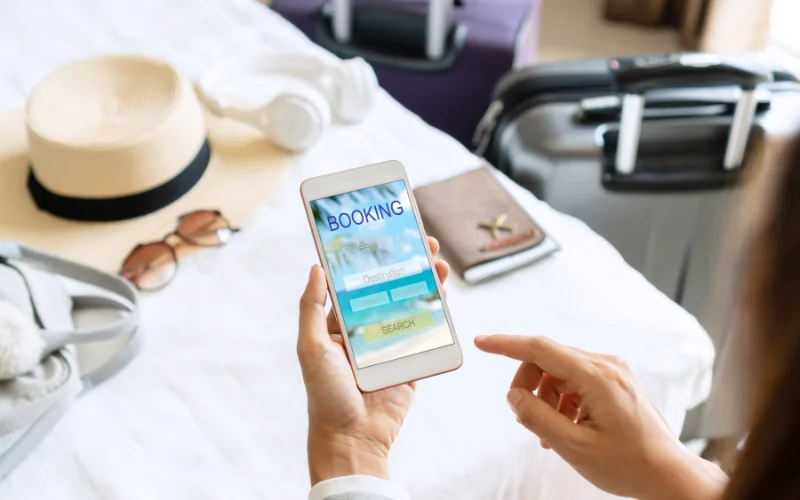
Check-in starts days before your guests arrive. Ideally, send a welcome message within the first 24 hours after the booking.
Why? To confirm the key details:
- Dates
- Number of guests
- Expected arrival time
- Whether they have any special requirements…
It can be as simple as asking: “What time do you expect to arrive? Are you coming by car or by plane?”
Once you have those details, send a reminder around three days before the trip with the important information:
- Full address
- Agreed check-in time
- Access instructions, and when they will receive them
- Your contact number…
And the day before, reconfirm just in case. A short message is enough: “Hi! Just confirming we are expecting you tomorrow at around 18:00. Let me know if anything changes. Have a good trip!”
Location and Property Access Information
First recommendation: do not just provide the address. Put yourself in the shoes of someone who does not know the area, may not speak Spanish and arrives tired and disoriented.
Ideally, prepare a detailed arrival guide with:
- Google Maps link
- Additional directions if the location is complicated, such as “the entrance is on the pedestrian street behind the church”
- How to access the building or development, including entrance codes, doorbell details and similar
- Exact property location, such as “3rd floor, door 3B on the right”
- Clear instructions for getting the key
And here is the trick: add photos to the explanations. One image of the facade, another pointing to the key box… This removes 95% of doubts.
You can send it on the day of arrival, but it is even better to do it 48 or 72 hours earlier so guests can plan the route in advance.
Check-In Options: In Person or Automated
In-Person Check-In: Welcoming Guests Face to Face
You have two options here:
- Welcome them in person
- Choose automated check-in
So let us look at the pros and cons of each.
In-person check-in has its charm: you give a warm welcome, explain everything face to face and answer questions immediately.
But it has one problem: it forces you to be available at a specific time.
If you choose this option because you can, or because you have no alternative, we recommend following these good practices:
- Be punctual; arriving late is unforgivable
- Greet guests with a smile and help with luggage if they look overloaded
- Give a quick tour: show them the essentials, such as the boiler, Wi-Fi and keys
- Verify IDs discreetly
- Ask whether they have any questions about the home or the area
That said, you need a plan B in case something unexpected happens. For example, what if you are ill on check-in day? You should have someone you trust who can step in.
Automated Check-In: Smart Locks and Key Safes
Let us be direct: automated check-in is the best option.
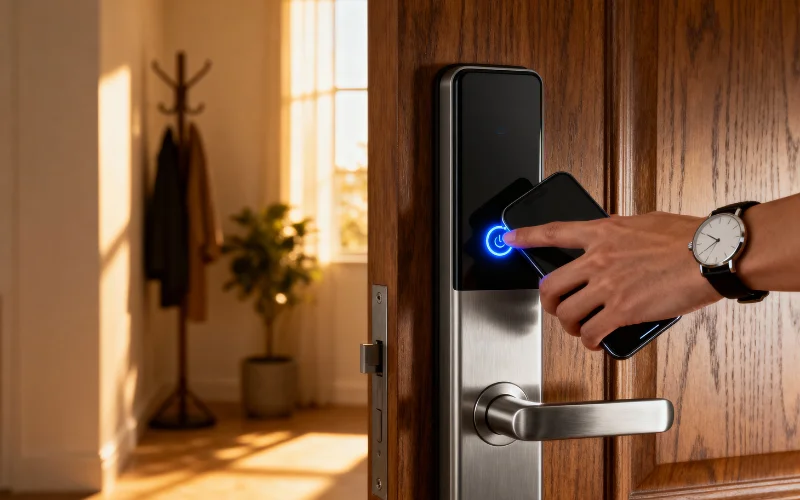
It allows guests to enter by themselves without you being present. That means they can arrive at any time, even in the early hours.
To do it, you can use two technologies:
- Smart locks:
- They open with a PIN code, mobile app or Bluetooth
- You can generate unique codes for each booking that expire automatically
- They are secure, remove the issue of lost keys and let you manage everything remotely
- Key safes:
- They are cheaper
- You leave the key in a box with a combination that the guest opens with a code
- They work without electricity or internet, so there is no technical failure risk
Of course, both options have drawbacks, because you need:
- Ultra-clear instructions with photos of the device
- To check everything before each check-in, including batteries and updated codes
- To communicate the code securely on the day of arrival
- To be available by phone in case something fails
If you ask us, the ideal approach is to combine technology with a human touch.
How do you do that?
Simple: use a smart lock, but send a message to confirm everything is fine once guests have entered.
Required Documentation
Collecting Personal Details and Registering Guests
This is the least glamorous and most tedious part of check-in, but it is necessary. In Spain, it is mandatory to register every guest over 16 and send their details to the authorities within 24 hours of arrival.
How do you do it?
- Request each guest’s ID card or passport
- Record only the required details; do not copy the full document for privacy reasons
- Complete the traveller registration form, on paper or digitally
- Send the information through the SES.Hospedajes platform
The most efficient option is to use one of the automated tools on the market, allowing guests to enter their details before arrival, scan their document and sign digitally. That is how we do it, at least, to save paperwork and avoid errors.
Contracts and Deposits, If Applicable
It is not mandatory, but it is highly recommended to have a signed contract setting out the conditions: dates, price, deposit, house rules and cancellation policy.
If you are going to request a deposit, communicate it from the moment of booking. Never surprise the guest at the door with “that will be a EUR 200 deposit now”.
And return it promptly if everything is in order, because an unjustified delay almost guarantees a bad review.
How to Welcome Guests
Clear, Visual Access Instructions
Consider taking these three measures:
- Make your accommodation easy to identify with signage: a doorbell with your name, a sign on the door or visual references that help guests recognise it.
- If they arrive at night, leave outside lights on and, if possible, set the home to a pleasant temperature.
- Try to be available by phone during check-in time, so if something does not work you can guide them step by step.
Yes, the last point can be a little tiring and will not always be possible, but do it as far as you can.
Useful Information About the Property and Area
This is absolutely essential if you do not want to spend all day answering WhatsApp messages.
Prepare a house guide with:
- Wi-Fi password, clearly visible
- Appliance instructions
- Basic rules, such as quiet hours and recycling
- Emergency contacts
- Transport options, such as taxi, bus or scooter hire
- Local recommendations, including restaurants, supermarkets and attractions
It does not need to be a 20-page brick. Keep it visual, with clear sections and the most important information first.
And, of course, if you host international guests, have at least an English version.
Problem Solving
Emergency Contact and Support During the Stay
We have to insist on this: from check-in, make sure the guest has your mobile number and knows they can contact you about any urgent problem.
In particular, try to be available during the first few hours of the stay, because that is when guests are most likely to need you.
This alone will help you avoid plenty of problems, but it is not enough on its own…
Procedure for Handling Unexpected Issues
Unexpected issues are normal. Nothing is perfect and, whatever you may think, guests mainly want you to resolve anything that appears very quickly.
These are the most common procedures we have seen during check-in:
- The guest cannot get in: guide them by phone and, if that does not work, go there or send someone if you cannot.
- There is a problem with the accommodation, such as poor cleaning or something broken: apologise sincerely and act fast. Call a technician, offer alternatives and even compensate them if necessary.
And always, always stay calm and empathetic. A well-resolved problem can still end in a good review if the guest feels you acted honestly and transparently.
Tips to Improve the Check-In Experience
Tips to Improve the Check-In Experience

Personalising the Check-In Process
If you want to go a little further and make check-in exceptional, you can add a few extra touches. For example:
- If you know they are celebrating an anniversary, leave a congratulations card.
- If they are travelling with children, prepare a few toys or snacks.
And in any case, leave a welcome pack: coffee, fruit, a bottle of water or wine, a handwritten welcome note… and anything else you think will add value.
These small gestures cost little but create a huge emotional impact.
Requesting Feedback for Continuous Improvement
But wait, because we are not finished:
- Send a message the day after check-in asking whether everything is all right. This lets you detect problems before they become public complaints.
- During the stay, do not overwhelm guests, but try to be quick and available if they need you.
- At the end, invite them to share suggestions: “Any ideas for improvement?”
Above all, act on the feedback. If several guests mention the same thing, change it immediately so the same problem does not keep happening.
Would You Like to Automate Check-In and the Whole Management of Your Holiday Home?
At Home2Book, we are a company specialised in holiday rental management, managing more than 600 properties in Spain. We have the experience and tools to ensure your guests start and end their stay happy.
We have specialists in customer service, revenue management and marketing, and we take care of every task, including check-in, cleaning and fixing damage, so you do not have to worry about a thing.
Contact us through this form and we will be happy to advise you on anything you need.